Architecture overview
Architectural approach
-
AnalytX is implemented as a modular monolith using the Model–View–Controller (MVC) architectural pattern.
-
The application is developed in object-oriented Java and adheres to SOLID design principles, ensuring strong separation of concerns, maintainability, and long-term extensibility.
-
Each functional domain is implemented as a self-contained module exposing REST APIs, enabling clear boundaries between modules while retaining the simplicity and performance benefits of a monolithic deployment.
-
At the core of AnalytX is the ACTUS library, which drives contract-based cashflow generation.
-
This capability is extended through additional libraries - Valuation, Bookkeeping, and Validator, which collectively implement enterprise-grade risk management and risk analytics business logic.
Solution architecture
-
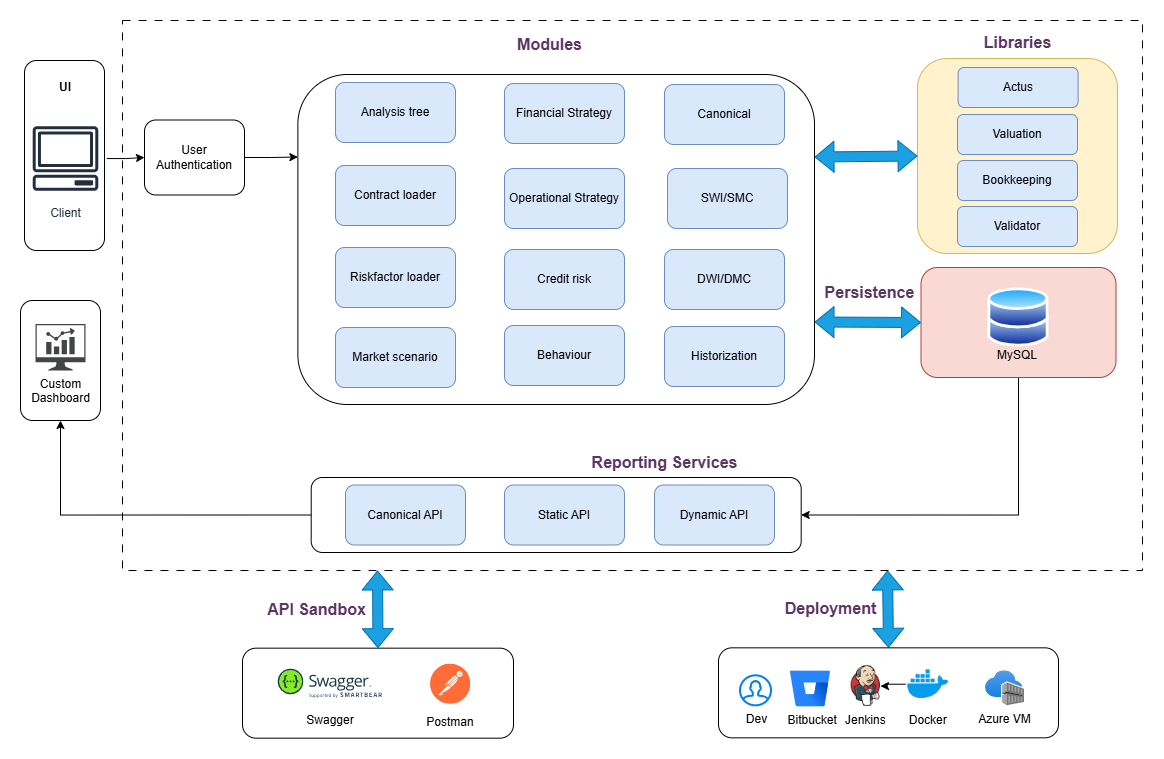
The Solution Architecture diagram illustrates AnalytX as a modular monolith composed of multiple functional modules, including Analysis Tree, Contract Loader, Risk Factor Loader, Market Scenario Management and Strategy Engines.
-
These modules interact with shared core libraries (ACTUS, Valuation, Bookkeeping, Validator) and persist data via a centralized MySQL database.
-
Reporting services expose Canonical, Static, and Dynamic APIs to support dashboards and external integrations.
-
This design enables high cohesion within modules while maintaining low coupling across functional domains.
Cloud architecture
-
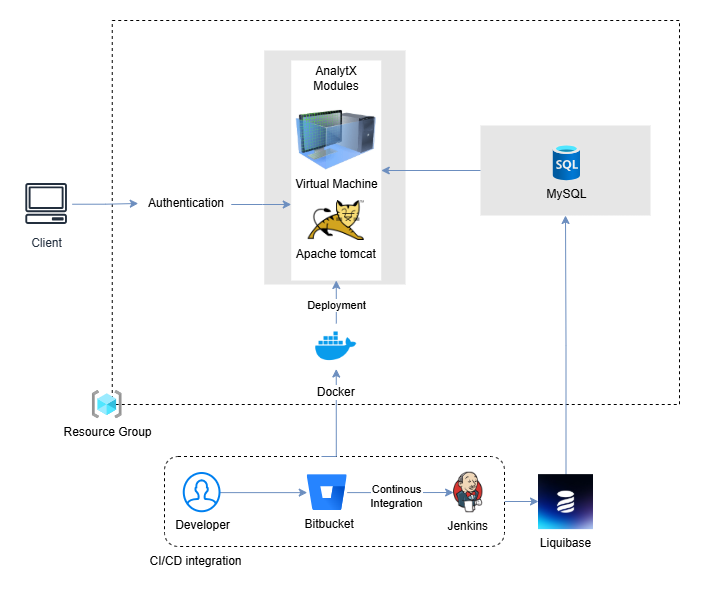
AnalytX follows CI/CD best practices using Bitbucket, Jenkins, and Docker.
-
The application is containerized and deployed on a single virtual machine in Microsoft Azure, running Apache Tomcat.
-
In cloud deployments, the Azure MySQL database is hosted outside the application virtual machine, ensuring improved scalability, availability and operational resilience.
-
AnalytX can also be deployed on-premises, offering functional parity with cloud deployments, though with reduced monitoring and operational capabilities.
Operational modes
-
AnalytX supports three operational modes that progressively extend analytical capabilities:
-
Canonical Mode: Core functionality including Analysis Tree, Contract Viewer, Model execution, Solver, and Reporting.
-
Static Analysis Mode: Extends Canonical Mode with Market Risk Factors to support sensitivity and stress analysis.
-
Dynamic Analysis Mode: Builds on Static Analysis by introducing scenario-based modules—Financial, Credit, Operational, and Behavioural - enabling forward-looking, scenario-driven risk analytics.
-